Why Knife Skills Matter More Than Ever
Strong knife skills aren’t just for professional chefs they’re essential for every home cook who wants to be faster, safer, and more confident in the kitchen. By mastering a few core techniques, you can eliminate stress and elevate every meal you prepare.
Why It Makes a Difference
Save Time: Good technique turns 30 minute preps into 10 minute breeze sessions. Smooth motions and proper cuts reduce effort and speed up your workflow.
Reduce Waste: A consistent cut means more of your ingredients end up in the pan instead of the trash, saving money and reducing food waste.
Cook More Safely: Dull knives and awkward grips lead to accidents. Skillful handling minimizes slip risks and boosts control.
The Power of Uniformity
Consistent knife work isn’t just about looks it directly affects how food cooks:
Even cooking: When all pieces are the same size, everything finishes at the same time. No more burnt edges or undercooked centers.
Better presentation: Uniform slices bring a polished look to everything from salads to stews.
Flavor clarity: Precise cuts can impact how flavors release especially in onions, herbs, and garlic.
Confidence in Every Cut
Knife mastery builds more than meals it builds trust in your own cooking process:
Stop second guessing your chopping technique
Handle a range of ingredients without hesitation
Lay the groundwork for learning advanced culinary skills later on
Developing strong knife skills creates a foundation that upgrades your entire cooking routine from prep to plating. Whether you’re tackling weeknight dinners or hosting a dinner party, it’s a skill that consistently pays off.
Getting the Right Knife for the Job
You don’t need a drawer full of fancy knives to cook well. You just need the right ones and you need to know how to use them.
Start with three basics: a chef’s knife, a paring knife, and a serrated knife. That’s your core team. The chef’s knife is your everyday workhorse it handles chopping, slicing, dicing. If you’re only buying one, make it this. Paring knives are for the small stuff: peeling, coring, trimming. Good for precision where a big blade would be clumsy. Serrated knives? Bread, tomatoes, citrus anything with a tough outside and soft inside.
When shopping, forget the gimmicks. The things that actually matter: balance, blade length, and comfort in your hand. A knife should feel like an extension of your arm, not a tool you’re fighting with. Most home cooks do best with a chef’s knife in the 8 inch range. It’s long enough for big jobs, still nimble for smaller tasks.
And about those starter sets they’re mostly fluff. You don’t need 12 knives. You need three good ones you use all the time. Invest the money you’d blow on a block set into quality versions of the knives you actually reach for.
Keep it simple, use them often, and let your skills not your gear do the talking.
The Grip That Changes It All
Mastering how you hold your knife can dramatically improve your control, efficiency, and safety in the kitchen. One simple shift the pinch grip can make a world of difference.
Why the Pinch Grip Works
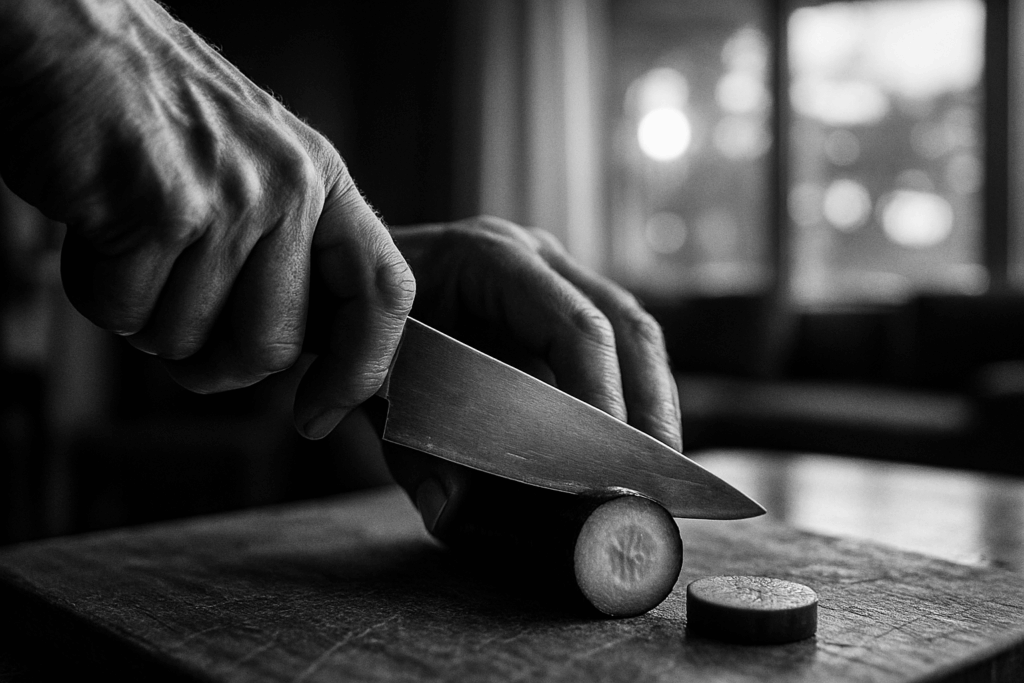
The pinch grip involves holding the blade of the knife between your thumb and forefinger, with the remaining fingers wrapped securely around the handle. This offers better balance and control, allowing for smoother, more precise cuts.
More precision: Your hand is closer to the blade’s center of control
Less fatigue: A balanced grip reduces strain on your wrist and shoulder
Fewer accidents: Control = safety when cutting dense or slippery foods
Mistakes to Avoid with Knife Grip
Many home cooks unintentionally train bad habits. These common errors increase the risk of injury and reduce cutting speed:
Holding only the handle: Limits control and can cause wobbling
Placing a finger on the spine: Reduces force and can lead to slipping
Loose grip: Leads to uneven cuts and slower prep time
Build Muscle Memory with Simple Drills
Like any skill, consistency builds confidence. Just a few minutes a day can help you develop a natural, effective pinch grip.
Try these easy daily habits:
Dry run slicing on a cucumber or carrot without cutting all the way through
Control drills using just the tip of the knife to make small indentations
Grip resets: Before each cutting task, mindfully re check your hand position
Consider incorporating these drills into your regular meal prep no extra time needed, just more intentional handling.
With the pinch grip as your foundation, every cut becomes easier, cleaner, and safer. It’s the quickest way to an instant knife skills upgrade.
Cutting Techniques Worth Learning
Understanding the core cutting techniques isn’t just about looking professional in the kitchen it’s about gaining real control over your ingredients. Different dishes call for different textures and sizes, and mastering these methods will help you cook with more precision and speed.
Know the Core Techniques
Each cut serves a purpose. Here’s a breakdown of common knife cuts and when to use them:
Slicing: Long, smooth cuts used for items like tomatoes, cucumbers, and cooked meats. Great for sandwiches, plating, and salads.
Dicing: Uniform cube shaped cuts, ideal for onions, peppers, or carrots. Perfect when you need even cooking or aesthetic appeal.
Chiffonade: A fine ribbon cut mostly used for leafy greens and herbs (think basil or spinach). Ideal for garnishes or integrating herbs without overwhelming the dish.
Julienne: Thin matchstick style strips. Common for stir fries or when prepping vegetables like carrots or bell peppers for quick, even cooking.
When to Rock, Push, or Pull
Choosing the right motion is just as important as the cut itself:
Rocking Motion: Use a curved blade (like a chef’s knife) with a gentle back and forth motion. Ideal for mincing herbs or garlic quickly.
Pushing Forward: Best when slicing dense or firm vegetables. Push the knife forward while applying downward pressure.
Pulling Toward: Useful for soft ingredients like tomatoes or raw fish. A gentle pull reduces squishing and keeps cuts clean.
Tiny Tweaks, Big Results
Even small adjustments can help your prep feel faster and more intuitive:
Keep your guiding hand in a claw grip for better safety and alignment
Let the knife do the work avoid pressing too hard or forcing cuts
Practice consistency by aiming for even sized pieces, no matter the technique
Over time, these movements become second nature. You’ll start prepping faster without even thinking about it and dishes will come out better because of it.
Safety Without the Guesswork
Let’s not sugarcoat it knife safety isn’t glamorous, but it’s non negotiable. First, get used to the “claw” grip. That means curling your fingers inward on the hand holding the ingredient, so your knuckles guide the blade while fingertips stay out of harm’s way. It feels weird at first, but within a week, it’ll be second nature and a lot less risky.
Next, your cutting board. If it slides around, you’re inviting an accident. Slip a damp towel or grippy mat underneath it. That simple move gives you a stable surface and sharper focus, especially when working fast or handling odd shaped produce.
Last and maybe counterintuitively sharper knives are safer. Dull blades bounce, drag, and require more force, which is when fingers tend to get involved. Get in the habit of honing your knife regularly, and keep a proper sharpening routine in place.
Good technique, stable gear, and a sharp edge. That’s your safety net.
Maintenance for Long Term Performance
Let’s get one thing straight: honing and sharpening are not the same. Honing realigns your blade’s edge it keeps a sharp knife sharp. Sharpening, on the other hand, removes metal to create a new edge from scratch. Honing should happen often, ideally every few uses. Sharpening? A few times a year, depending on use.
For honing, use a honing rod metal or ceramic both work, but ceramic is gentler. Run the blade along the rod at a 15 20 degree angle on each side. It’s quick, controlled, and should feel almost rhythmic with practice.
When it’s time to sharpen, you’ve got a few options: whetstones, pull through sharpeners, or electric sharpeners. Whetstones offer the most control and best results, but take a bit of learning. Start with a coarse grit to reshape the edge, finish with a fine grit to refine it. For most home cooks, a pull through sharpener does the job fine if used gently and not too often.
Don’t ruin a good edge with bad storage. Tossing knives into a drawer might be the fastest way to get them dull or damaged. Instead, go with a magnetic strip, a slotted knife tray, or a wood block with the edge facing up. Whatever keeps the blade covered and stable works.
Take care of your knives, and they’ll take care of you. Sharp tools aren’t just safer they make cooking smoother, faster, and a lot more satisfying.
Applying Knife Skills to Real Cooking
Why Precision Chopping Matters
Good knife work isn’t just about aesthetics it directly impacts how your food cooks and tastes. Uniform cuts ensure even cooking, better texture, and more thorough flavor absorption. For example, smaller, consistently chopped ingredients release flavor more evenly when sautéed or seared, adding depth to your dishes.
Example: Precision Chopping in Searing
When searing ingredients like onions, garlic, or aromatics, the surface area matters. Clean, even cuts mean:
Faster caramelization
Less burning or uneven browning
More intense aroma release
To explore the science behind this process, check out our detailed guide: The Science of Searing: How to Lock in Flavor
Techniques That Elevate Everyday Dishes
Knife skills don’t stop at making prep faster they shape the final flavor and texture of your food. Here’s how sharpening your technique can transform common meals:
Sauces: Finely minced shallots or garlic contribute richer base notes
Stir Fries: Uniform julienne vegetables cook evenly and retain their crispness
Stews: Consistent dicing ensures each bite has balanced flavor and texture
One Upgrade, Many Benefits
Mastering your chopping technique pays off across nearly every kind of recipe. The goal isn’t perfection it’s precision that enhances performance. Whether you’re searing proteins, reducing a sauce, or preparing a soup, how you cut your ingredients affects how your dish comes together.
Make It a Habit, Not a Skill Gap
Knife skills aren’t just for culinary school they’re muscles you build through daily practice. The good news? You don’t need extra time in your day to improve. The best place to refine your skills is during your regular meal prep.
Build Skills While You Cook
Instead of treating knife work as a side lesson, integrate it into your everyday cooking routine.
Dice onions while making sauce or soup
Practice slicing evenly when prepping vegetables for roasting
Use carrot tops, herb stems, or fruit scraps to practice cuts without wasting food
Challenge Yourself With Tougher Ingredients
Certain ingredients naturally improve your dexterity and confidence with a knife. They require more control, pressure, and awareness making them perfect training grounds.
Butternut squash: Great for practicing steady pressure and safe splitting
Onions: Mastering dicing, slicing, and safe claw grip techniques
Whole chickens: A great test for both precision and anatomical understanding
These ingredients demand more than just cutting they teach you how to think with your knife.
Focus on Just a Few Techniques
You don’t need to master every slicing style to level up in the kitchen. Start with 3 4 foundational techniques and repeat them until they feel automatic:
The rock chop for herbs and greens
A solid dice for vegetables
The julienne for matchstick style cuts
A confident slice for proteins, fruits, and more
Once these moves become second nature, you’ll notice smoother prep, faster meals, and food that cooks more evenly. Mastery isn’t about complexity it’s about controlled, consistent repetition.
Final Thought
Knife skill isn’t a separate goal it’s a natural by product of smarter, more mindful cooking. Treat every meal as a chance to practice and improve. Over time, that habit pays off with confidence and speed that feels truly pro.
2026 and Beyond: Smarter Tools, Same Fundamentals
The kitchen tech arms race is in full swing. Smart knives that track pressure and angles, cutting boards with built in guides, and even AI assisted slicing tools are all hitting the market. Some of them are genuinely clever useful for beginners or time crunched home cooks but let’s not pretend they’re silver bullets.
Technique still runs the show. If your grip is off or your motion’s clunky, no gadget’s going to save you from uneven cuts or wasted ingredients. The best investment isn’t in gear it’s in reps. Build skill first, then let the tools amplify what you already know.
The bottom line: learn by doing. Work with raw ingredients, handle your knife daily, and stay sharp (literally and figuratively). Whether you’re slicing herbs or breaking down a bird, simplicity, consistency, and old school technique still win.
 There is a specific skill involved in explaining something clearly — one that is completely separate from actually knowing the subject. Joycelyn Howellstine has both. They has spent years working with healthy cooking tips in a hands-on capacity, and an equal amount of time figuring out how to translate that experience into writing that people with different backgrounds can actually absorb and use.
Joycelyn tends to approach complex subjects — Healthy Cooking Tips, Culinary Techniques and Tricks, Seasonal and Festive Recipes being good examples — by starting with what the reader already knows, then building outward from there rather than dropping them in the deep end. It sounds like a small thing. In practice it makes a significant difference in whether someone finishes the article or abandons it halfway through. They is also good at knowing when to stop — a surprisingly underrated skill. Some writers bury useful information under so many caveats and qualifications that the point disappears. Joycelyn knows where the point is and gets there without too many detours.
The practical effect of all this is that people who read Joycelyn's work tend to come away actually capable of doing something with it. Not just vaguely informed — actually capable. For a writer working in healthy cooking tips, that is probably the best possible outcome, and it's the standard Joycelyn holds they's own work to.
There is a specific skill involved in explaining something clearly — one that is completely separate from actually knowing the subject. Joycelyn Howellstine has both. They has spent years working with healthy cooking tips in a hands-on capacity, and an equal amount of time figuring out how to translate that experience into writing that people with different backgrounds can actually absorb and use.
Joycelyn tends to approach complex subjects — Healthy Cooking Tips, Culinary Techniques and Tricks, Seasonal and Festive Recipes being good examples — by starting with what the reader already knows, then building outward from there rather than dropping them in the deep end. It sounds like a small thing. In practice it makes a significant difference in whether someone finishes the article or abandons it halfway through. They is also good at knowing when to stop — a surprisingly underrated skill. Some writers bury useful information under so many caveats and qualifications that the point disappears. Joycelyn knows where the point is and gets there without too many detours.
The practical effect of all this is that people who read Joycelyn's work tend to come away actually capable of doing something with it. Not just vaguely informed — actually capable. For a writer working in healthy cooking tips, that is probably the best possible outcome, and it's the standard Joycelyn holds they's own work to.